
How Much Is the HOA in Palos Verdes and Rolling Hills?
Last updated October 21, 2026
It depends on which part of the Peninsula you buy in, and the answer is rarely a simple monthly fee. In the City of Rolling Hills, the Rolling Hills Community Association lists its annual assessment at 20 cents per $100 of Los Angeles County assessed value, so a home assessed at $2M would owe about $4,000 a year at that rate. In Palos Verdes Estates and Miraleste, the Palos Verdes Homes Association and its Art Jury enforce recorded deed restrictions, and the costs most owners actually feel are review and inspection fees from its published fee schedule whenever they change the outside of a home.
What is the Rolling Hills Community Association, and what does it pay for?
Rolling Hills is unusual even by Peninsula standards. According to the RHCA, the Association and the City of Rolling Hills share the same boundaries, the entire community is on private property with no public property inside the city, and all roads sit on Association easements. There are three gated entrances, each staffed 24 hours a day, 7 days a week.
The RHCA was established in 1936 by developer A.E. Hanson and the Palos Verdes Corporation. Today its stated purpose is to maintain the roads and common areas, uphold architectural standards, and operate the gates. That answers a question commenters often ask: the roads and gates inside Rolling Hills are paid for by the people who live there, through the Association.
How is the Rolling Hills assessment calculated?
The RHCA says its annual assessment is fixed by the Board of Directors and that the current rate is 20 cents per hundred dollars of the assessed valuation established by Los Angeles County. Its Building Regulations confirm that revenue comes from assessments levied against all properties based on county assessed valuation, plus miscellaneous fees.
Two practical points for buyers. First, because the rate is tied to assessed value, a new owner who buys at today's price will usually pay more than a long-time neighbor whose assessed value has grown slowly. Second, the Board sets the rate, and a recent RHCA agenda lists the assessment rate for the 2026-27 fiscal year as a business item. Confirm the current rate with the Association during escrow rather than relying on any number you read online, including this one.
What deed restrictions come with a Rolling Hills home?
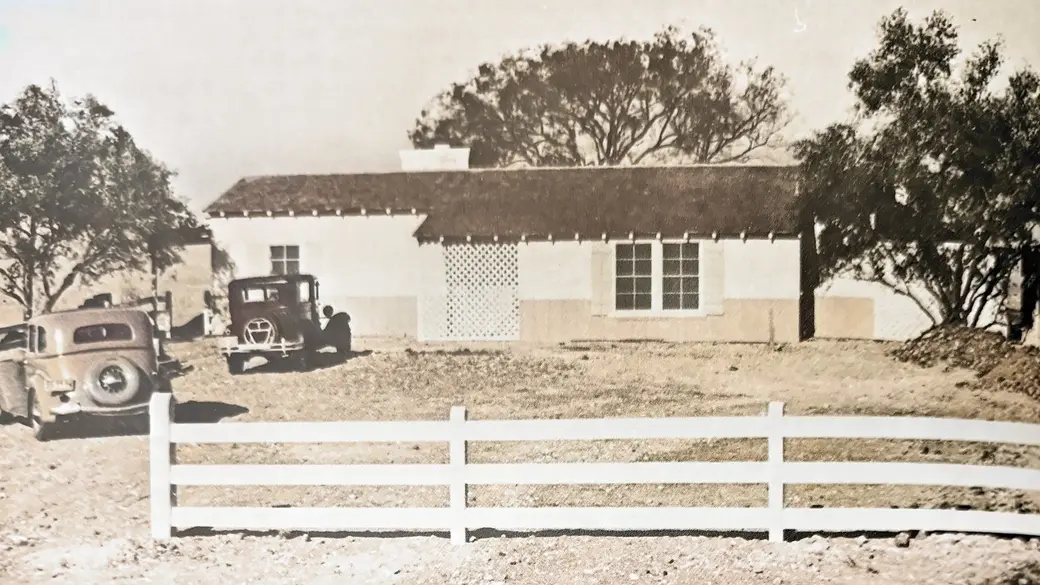
The RHCA Building Regulations state their purpose plainly: to preserve the character of the community as single family, low-profile, one-story homes, white in color with earth-tone trim, traditional or California ranch style in appearance (with the exception of Williamsburg Lane). The general information page adds specifics:
- Perimeter fencing should be three-rail fences painted white, and new or replacement fencing requires a survey and an Association permit.
- Building exteriors must be painted pure white with no tint. Trim, doors, or shutters in another color need Architectural Committee approval.
- All new buildings or additions need approval from both the RHCA Architectural Committee and the City of Rolling Hills.
Per the Architectural Committee page, building without a permit results in a stop order and a violation on the property.
Does Palos Verdes Estates have an HOA?
Yes, in its own way. The Palos Verdes Homes Association is a 501(c)(4) nonprofit whose members are the owners of record of property in Palos Verdes Estates and Miraleste, with one vote per property. Its authority comes from Protective Restrictions recorded in 1923. A City of Palos Verdes Estates ordinance, Ordinance No. 773, states that substantially all residential property in the city is subject to these recorded restrictions and that development and remodeling there generally require both PVHA and Art Jury approval and city approvals.
The recorded documents do give the Association power to levy an annual assessment. The 1921 trust indenture quoted by the Court of Appeal in Kindig v. Palos Verdes Homes Assn. authorizes a charge based on county assessed valuation. In day-to-day practice, though, what PV Estates owners pay the PVHA shows up as project fees. Ask the Association directly whether any assessment applies to the parcel you are buying.
What does the Art Jury review, and what does it cost?
Per the PVHA, the Art Jury can review any plan that affects the exterior appearance of a structure or property. That covers new construction and remodels, plus maintenance like repainting, re-roofing, and replacing windows and doors. In the Association's words, no structure can be built or altered in any way without Art Jury approval.
A few examples from the current PVHA fee schedule:
- Like-for-like re-roof: $300, or $600 if it needs Art Jury review
- Rooftop solar: $1,000 per building
- Completion and compliance inspection: $350 per site visit
- New square footage: $2.50 to $4.00 per square foot depending on project size
- As-built (unapproved) items: four times the normal review fee
That last line matters most to buyers. The PVHA's own FAQ notes that unapproved work is often resolved at the time of sale, when buyers are usually required to bring a property into compliance.
What HOA documents does California law require a seller to provide?
If the home is in a common interest development governed by the Davis-Stirling Act, Civil Code Section 4525 requires the seller to provide, as soon as practicable before transfer of title, items including all governing documents, a written statement of current regular and special assessments and fees, any unpaid assessments or fines, any approved assessment changes that are not yet due, any rental restriction, and any unresolved violation notice. On request, the buyer can also get the past 12 months of approved board meeting minutes.
Whether a given Peninsula association fits that definition is a legal question for the parcel. On any PV or Rolling Hills purchase, I ask for the recorded restrictions in the preliminary title report, a written statement of dues and fees from the association, and any open violation or permit history. In PV Estates, I also suggest a PVHA completion and compliance inspection before contingencies come off.
Frequently asked questions
How much is the HOA in Rolling Hills?
The Rolling Hills Community Association lists its annual assessment at 20 cents per $100 of Los Angeles County assessed value, which works out to about $4,000 a year on a home assessed at $2M. The Board sets the rate, so confirm it during escrow.
Do Palos Verdes Estates homeowners pay HOA dues?
PV Estates homes are governed by the Palos Verdes Homes Association, which has authority to levy an assessment, but the costs owners typically see are Art Jury review and inspection fees for exterior work. Ask the PVHA in writing what applies to your parcel.
What does the Palos Verdes Art Jury approve?
Any change to the exterior appearance of a structure or property in Palos Verdes Estates and Miraleste, including new construction, remodels, repainting, re-roofing, and replacing windows and doors.
Who maintains the roads in Rolling Hills?
The Rolling Hills Community Association. All roads sit on Association easements and are maintained with assessments paid by property owners.
Can I paint my Rolling Hills house any color?
No. Exteriors must be pure white with no tint. Other colors for trim, doors, or shutters need Architectural Committee approval.
Thinking about Rolling Hills, PV Estates, or anywhere else on the Peninsula? I am happy to pull the restrictions and walk you through what they mean for the house you want. Start with a free home evaluation or reach out with an address.
Zoltan
Categories
Recent Posts



Realtor®, SRES®, South Bay Real Estate Agent | Hermosa Beach, Manhattan Beach & Palos Verdes License ID: 02248774
+1(661) 234-6442 | zoltan@sellwithzoli.com